Caregiving or Caretaking?
Lately, I’ve noticed something.
More people seem to be using the word caretaking when talking about caring for an aging parent, spouse, or other adult loved one.
Personally, I’ve always preferred caregiving.
At first, I thought it was simply because that’s the word I’m accustomed to using. I’m a family caregiver coach. I spent years working with family caregivers. We talk about family caregiving, caregiver support, caregiver stress, and caregiver resources.
But the more I thought about it, the more I realized the distinction may matter to me for another reason.
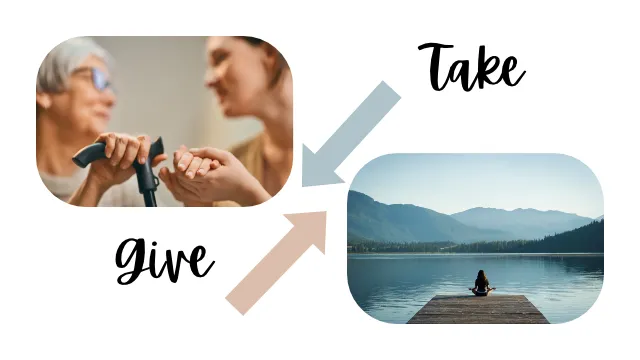
Maybe caregiving is what we do for others, while caretaking is something we also need to do for ourselves.
I’m not suggesting that this is the official definition of either word. Language is rarely that tidy, and both words can describe caring for another person.
I’m thinking about the words a little differently.
Giving care to someone else
When I think about caregiving, I think about giving support to another person.
That might mean driving Dad to an appointment, helping Mom understand her Medicare paperwork, checking on a neighbor, picking up groceries, managing medications, coordinating services, or sitting beside someone who simply doesn’t want to be alone.
Sometimes caregiving involves doing.
Sometimes it involves listening.
Sometimes it means helping someone make a decision we wouldn’t necessarily make ourselves.
That last one matters.
The person receiving our help is still a person, not a project to manage. Whenever possible, they still have preferences, opinions, priorities, and choices.
That’s one reason the word caregiving feels right to me. I am giving care, not necessarily taking responsibility for another adult’s entire life.
But caregivers need care, too
Here’s where caretaking started to sound different to me.
When something is entrusted to our care, we maintain it. We pay attention to it. We notice when it needs attention before it falls apart.
What if we thought about ourselves that way?
Family caregivers are frequently told to practice “self-care.” It’s good advice, but the phrase can sometimes feel like one more item on an already impossible to-do list.
Exercise more. Get enough sleep. Eat well. Take a break. See your friends. Go to your own medical appointments. Ask for help.
All important.
And all remarkably easy to postpone when someone you love needs you.
Perhaps caretaking offers another way to think about it.
It isn’t an indulgence. It’s maintenance.
If I’m going to continue giving care, I also have to take care of the person doing the giving.
Me.
Caretaking can also mean knowing what isn't mine to carry
Taking care of ourselves isn't limited to sleep, exercise, appointments, and time off.
Sometimes it means recognizing when we've begun carrying responsibilities that don't belong entirely to us.
We can care deeply about someone without being responsible for every decision they make, every emotion they experience, or every problem that arises.
We can offer help without taking over.
We can set a boundary without withdrawing our love.
We can recognize that another adult may make a choice we don't like and still resist the urge to assume control simply because we believe we know what's best.
Sometimes taking care of ourselves means noticing just how much we've started carrying.
Release doesn't mean stop caring. It means stop carrying.
Maybe we need both
So I’ll continue using the word caregiving when I talk about supporting another person.
And perhaps I’ll start thinking a little more intentionally about caretaking when I think about sustaining myself.
Caregiving is the care I give.
Caretaking reminds me to care for what needs sustaining, including me.
That may not be the dictionary distinction between the two words.
But it’s becoming mine.
Give care to the people you love. Take care of yourself, too.
Because sustainable care really does need both give and take.